|

|
|
|
|
|
Modern War, Issue #54 - Game Only
|
|
|
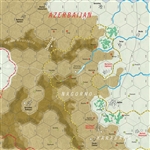
The Nagorno-Karabakh War: 1992-1994 is a two-player wargame of the war between Azerbaijan and the breakaway province (Oblast) of Nagorno-Karabakh, inhabited by an Armenian majority. After the first ethnic clashes between Armenians and Azeri, during the death throes of the Soviet Union, Nagorno-Karabakh declared independence from Azerbaijan. The Azeri launched an ethnic cleansing campaign. Faced with annihilation, the Armenians resisted and fought back.

|
|
|
|
|
|
|
|
|
|
Modern War, Issue #52 - Game Only
|
|
|
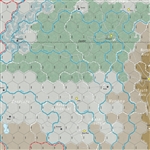
World War Africa: The Congo, 1998-2001 is a two-player wargame. One player represents the rebels consisting of a coalition of East African countries, namely Rwanda, Uganda and Burundi, and their local proxies: the MLC and the RDC. The player controls the Congolese Armed Forces supported by a coalition of African countries, including Angola, Zimbabwe and Chad. Each hex on the map represents 100 kilometers from side to side.
|
|
|
|
|
|
|
|
|
|
Modern War, Issue #50 - Game Only
|
|
|
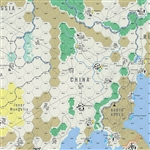
Putin Moves East is an operational-strategic level two player wargame covering a struggle for control between the Russian led Eurasian Union and a Coalition of opposing states, led by the People's Republic of China, to gain control of the Far East. Among other things, the game presumes a breakdown in Russian Chinese relations leading to open belligerency. Units represent operational task forces of corps or reinforced size; special forces; airpower; and cyberwar. Additionally, paramilitary forces play a significant role in the game rules.
|
|
|
|
|
|
|
|
|
|
Modern War, Issue #48 - Game Only
|
|
|
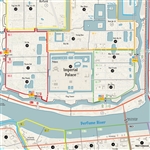
Block by Block is a two-player conflict simulation of the 1968 Battle of Huế. Players must balance the military difficulties imposed by the challenges of constrained urban warfare and unique terrain of the Huế Citadel, with the overriding considerations of each side’s respective political goals.
|
|
|
|
|
|
|
|
|
|
Modern War, Issue #45 - Game Only
|
|
|
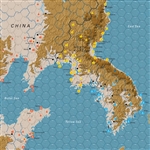
The Dragon and The Hermit Kingdom is a two player game that covers the hypothetical simulation of a second Korean War that could occur in the very near future. This game is a precursor to The Dragon that Engulfed the Sun (Modern War #42). It simulates the war that would have occurred on the Korean peninsula just prior to that game’s setting.
|
|
|
|
|
|
|
|
|
|
Modern War, Issue #38 - Game Only
|
|
|
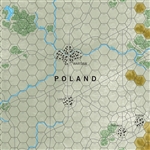
Soyuz ’81 is an intermediate low complexity two-player wargame covering the possibilities inherent within the first month of that never-run operation. The Soviet side encompasses all Soviet, East German and Czechoslovakian forces. The Polish side consists of that nation’s regular army and state militia. Each hex represents 16 miles (26 km) from side to opposite side. Each turn represents one tenth of a month (approximately three days). Each unit of maneuver is a division. The game map covers Poland and the adjacent jump off areas for the Soviet Army.
|
|
|
|
|
|
|
|
|
|
Modern War, Issue #37 - Game Only
|
|
|
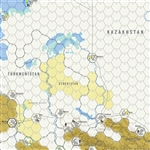
Putin Moves South is an operational-strategic level two-player wargame covering a hypothetical struggle between Russia and a coalition of opposing states to gain control of Central Asia, encompassing the area from the Russian frontier to the Persian Gulf. Combatants include, Russian, NATO, Chinese, Iranian, and various Central Asian States including the Persian Gulf countries.
|
|
|
|
|
|
|
|
|
|
Modern War, Issue #36 - Game Only
|
|
|
Cold Start: The Next India-Pakistan War (CS) is a strategic-level, two-player wargame of low-intermediate complexity that covers the campaign that could occur if the Indians decide to try for the big win over long-time opponent Pakistan. The title comes from the fact “Cold Start” is the phrase used by the Indian military to describe their officially declared policy of eschewing the first use of nuclear weapons in any future war with Pakistan.
|
|
|
|
|
|
|
|
|
|
Modern War, Issue #32 - Game Only
|
|
|
Operation Musketeer is a wargame based on the assumption that the 1956 Anglo-French-Israeli invasion of Egypt turned into a major superpower confrontation in which the forces of the Soviet Union and United States became involved. Historically, the invasion was ended because both the USSR and USA opposed the Allied invasion. But, the assumption here is that, instead, both Moscow and Washington were drawn into the conflict and deployed combat forces to support their respective camp.
|
|
|
|
|
|
|
|
|
|
Modern War, Issue #29 - Game Only
|
|
|
Putin’s War: Reclaiming the Soviet Empire in Eastern Europe is a strategic-level, two-player wargame of low-intermediate complexity that covers the campaign that could occur if the Russian dictator decides to give up his strategy of incremental “opaque” warfare and instead simply try for a big win. The game’s sub-systems are crafted to present a supreme-commander’s-eye-view of such a war. It’s therefore almost fully strategic in its perspective, with only the most pastel of operational and tactical undertones added to enhance its tone and texture in those regards. Putin’s War takes two experienced players only about two hours to complete, and it’s adaptable for solitaire play.
|
|
|
|