|
Modern War, Issue #17 - Game Edition
|

|
Modern War, Issue #19 - Game Edition
|
|
|
|
|
|
|
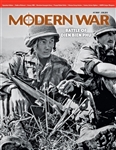
Dien Bien Phu is a wargame covering the decisive battle of the First Indochina War in which elite French Expeditionary Force units defended an air-land base against the communist Viet Minh. The game covers the critical period of Viet Minh assaults and French counterattacks of March to May, 1954. Historically, the Viet Minh won the battle, overrunning the base. This led to the collapse of the French position in Indochina and eventual US involvement in Vietnam.
|
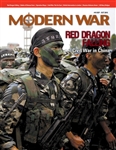
RED DRAGON FALLING It was the Chinese scholar-historian Wei Yuan, writing in the mid-19th century, who first formally identified his nation’s apparently inescapable cycles of “chaos and humiliation” (quru), followed by “rejuvenation” (fuxiang), followed by “wealth and power” (fuqiang), and then back to quru to start again. More recently, Queens College futurist and sometimes-CIA analyst Dr. Bruce Bueno de Mosquita wrote concerning China that he sees no factors in the present-day environment working to end or deflect that same cycle. It was the shared conclusions of those two men, working over a century-and-a-half apart, which inspired me to design this wargame modeling the military parameters and possibilities inherent in the next phase of Chinese quru – civil war.
|
|
|
|
Modern War, Issue #20 - Game Edition
|
|
Modern War, Issue #23 - Game Only
|
|
|
|
|
|
|
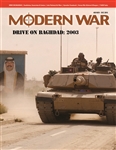
Race to Baghdad: 2003 is a solitaire game in which the player takes command of Central Command Forces during Operation Iraqi Freedom. Your goal is to defeat Saddam Hussein’s forces in such a manner as to prevent a post-campaign insurgency from breaking out.
|
Fallujah, 2004: City Fighting in Iraq is a solitaire wargame system covering the Coalition fight to retake the city of Fallujah from Iraqi insurgents in 2004. This led to two battles, the first in April and the second in November. These became some of the biggest engagements of the Gulf War. The player controls Coalition forces while the game system controls the Opposition forces (the Insurgents), known in the game as OPFOR.
|
|
|
|
Modern War, Issue #26 - Game Only
|
|
Modern War, Issue #30 - Game Edition
|
|
|
|
|
|
|
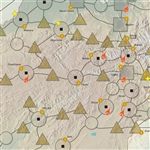
Invasion Afghanistan: The Soviet-Afghan War is a solitaire game that simulates the Soviet invasion of and the war in Afghanistan, 1979-89. The player controls Soviet forces, but the Opposition Force (the Resistance) is controlled by the game system. The war is played as scenarios in which you, the player, must accomplish various Missions to win. The game shows the war from the perspective of the Soviet command; It concentrates on its major historical objectives…victory is in terms of holding the cities, towns, and lines of communications. You can also win by destroying Resistance morale.
|
Enduring Freedom is an operational-level solitaire simulation of the US-Coalition invasion of Afghanistan in the wake of the 11 September 2001 terrorist attacks in New York and Washington. The player controls the forces of the Coalition (US, NATO, and the Northern Alliance). The game system controls the opposing Islamist forces (Al Qaeda, the Taliban, and Pakistani Volunteers). The objective of the game is for the Coalition to destroy Al Qaeda and establish the basis for a stable Afghanistan such that a new civil war will not break out later. The game covers the period of October 2001 (the initial US invasion) to March 2002 (the conclusion of Operation Anaconda).
|
|
|
|
Modern War, Issue #36 - Game Edition
|
|
Strategy & Tactics Issue #142 - Game Edition
|
|
|
|

|
|
|
Cold Start: The Next India-Pakistan War (CS) is a strategic-level, two-player wargame of low-intermediate complexity that covers the campaign that could occur if the Indians decide to try for the big win over long-time opponent Pakistan. The title comes from the fact “Cold Start” is the phrase used by the Indian military to describe their officially declared policy of eschewing the first use of nuclear weapons in any future war with Pakistan.
|
Red Beach One is a solitaire wargame simulation of the assault on Betio Island. The player assumes the role of commander of the US Marine forces attempting to take the island, using the historical units which conducted the original assault. He may also utilize support from airpower, engineers, and naval bombardment. The objective is to clear the island of Japanese defenders in the allotted time. The game system accounts for the Japanese defense (which, historically, was based on a static defense of fortified positions, with an occasional counter-attack). There is also an option two-player version.
|
|
|
|
Strategy & Tactics Issue #181 - Game Edition
|
|
Strategy & Tactics Issue #224 - Game Edition
|
|
|
 OUT OF STOCK!!!
|
|
|
|
|
|
The Fall of Rome
|
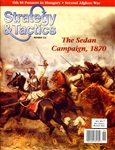
The Sedan Campaign, 1870 (SC70), is a low-complexity, operational-level simulation of the battles that comprised the first month of active operations of the Franco-Prussian War. The game is intended for two players, one commanding the Prussian (actually, the North German Confederation) and the other French forces, though it can also easily be played solitaire by a person willing to command both sides.
|
|
|
|
Strategy & Tactics Issue #264 - Game Edition
|
|
Strategy & Tactics Issue #280 - Game Edition
|
|
|
|

|
|
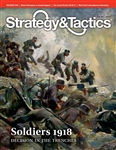
Shiloh: Bloody April, 1862
The design, by Paul Koenig, uses an evolution of the
old-Avalon Hill classic, Gettysburg ’77. Each game turn equals one hour,
and each hex on the map represents 100 yards. Units of maneuver are
double-sided brigades.
|
Soldiers:
Decision in the Trenches, 1918 is a two-player tactical wargame of
low-intermediate complexity simulating the first 30 to 60 minutes of a
hypothetical (though typical) attack by an American infantry division somewhere
along 1st US Army’s area of operations on the Western Front
in the late summer or early autumn of that year.
|
|
|
|
Strategy & Tactics Issue #287 - Game Edition
|
|
Strategy & Tactics Issue #305 - Game Edition
|
|
|
|
|
|
|
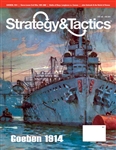
Goeben, 1914
|
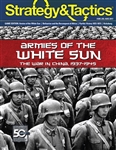
Armies of the White Sun is a solitaire wargame covering the fighting in China from the Marco Polo Bridge Incident through Pearl Harbor to the planned 1943 Operation Go-Go aimed at capturing Chongking and ending Chinese resistance at the national level. The single player actively commands the invading Japanese forces, while the rules system directs him in the deployment of the defending Chinese. The player wins by capturing key areas on the map. Throughout the game, the player selects units for an operational force, then maneuvers with that force to achieve objectives while fighting Chinese forces as they appear during operations.
|
|
|
|
Strategy & Tactics Issue #311 - Game Edition
|
|
Strategy & Tactics Issue #314 - Game Edition
|
|
|
OUT OF STOCK!!!
|
|
|
|
|
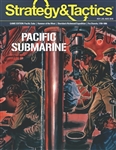
Pacific Subs. Germany's U-boats are better known, but the US Navy's submarine fleet achieved the greater victory, bringing the Japanese Empire to its knees by hollowing out its merchant fleet. In this solitaire game, you the player represent the skipper of a submarine. You task is to conduct patrols against the Japanese by supporting the US fleets in combat, ambushing Japanese warships, carrying out covert operations in Japanese territory, and, above all, by sinking merchant ships and tankers. You can conduct one of several individual patrols, or fight the whole campaign, with a goal of promotion to Captain---if you survive.
|
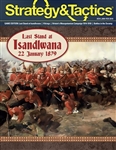
Last Stand at Isandlwana, 22 January 1879 is a two-player tactical wargame of low-intermediate complexity simulating the last 90 to 240 minutes of that infamous and legendary battle of the Anglo-Zulu War. The Zulu player is on the offensive, attempting to wipe out the entire British force on the map as quickly as possible. The British is attempting to win by having some remnant hold out longer than occurred historically or, alternatively, by having some portion of his command escape off the map and get back to relative safety at Roarke’s drift.
|
|
|
|
Strategy & Tactics Issue #318 - Game Edition
|
|
Strategy & Tactics Issue #323 - Game Edition
|
|
|
|
|
|
|
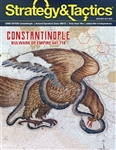
Constantinople is a solitaire wargame system covering the Byzantine (or Later Roman) Empire in the late 7th and early 8th centuries, the era of the two Barbarian sieges of the great City of Constantinople (AD 672, 717). The player controls Byzantine and allied forces. The game system controls various barbarian forces: Caliphates of Egypt, Syria and Mosul, Khazar Khanate, Bulgar Kingdom, Slavic Tribes and Lombard Kingdom.
|
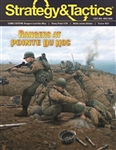
Rangers: Lead The Way is a solitaire simulation of the US Army Ranger assault on the Pointe du Hoc on D-Day. The game challenges the player to do better than the actual Ranger attack up the cliffs that historic morning and additionally allows the player to fight the battle using the planned, rather than the actual, forces and landing beaches. The scenarios cover action through 0300 June 7, a span of almost 24 hours.
|
|
|
|
Strategy & Tactics Issue #326 - Game Edition
|
|
Strategy & Tactics Issue #335 - Game Edition
|
|
|
|
|
|
|
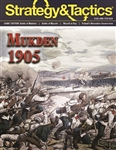
Mukden 1905 is a two-player simulation (easily adapted for solitaire play) of the climactic struggle of the Russo-Japanese War of 1904-05. Both players have the opportunity to attack and defend, but the main burden of the offensive is on the Japanese player.
|
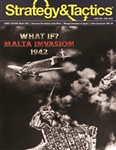
Descent on Malta is a solitaire operational level simulation of the planned but never executed Axis airborne assault on the British island fortress of Malta. The player controls Axis forces (Germans and Italians). The game system controls the opposing Allied forces and reaction. The objective of the game is for the Axis to capture Malta at the lowest possible cost in casualties. The design is based on the Crete '41 game (World at War #47).
|
|
|