|

|
|
|
|
|
Strategy & Tactics Issue #361 - Game Only
|
|
|
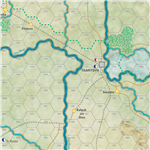
Tsaritsyn: The Volga 1918–20 is a wargame covering the Russian Civil War campaign revolving around the city of Tsaritsyn (later Stalingrad, then Volgograd). The game pits Red Russian (Bolshevik) forces against the White Russians (anti-Bolsheviks along with some Allied and German support). The original campaign stretched from July 1918, when the White Russians first besieged the city, through the White capture of the city in June 1919 and the final Red counteroffensive which retook the city. Tsaritsyn was critical as an industrial city and river port. The White Russian General Denikin also used the city as a base to launch one wing of his offensive towards Moscow in 1919.

|
|
|
|
|
|
|
|
|
|
Strategy & Tactics Issue #360 - Game Only
|
|
|
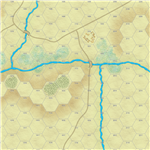
Eagles of Rome is a grand tactical system for battles of the Roman Era, from the Republic through the Empire to the early Byzantine era. This game is Scipio, covering the battles of the Middle Republic, mainly during the Punic and Macedonian Wars (roughly, 246–100 BC). Players command armies, from Roman legions to Macedonian Phalangites and Carthaginian companion cavalry, with distinctions between melee and fire combat, plus special tactics. Morale is a critical factor. The scenarios provide specific rules for the included battles.
|
|
|
|

|
|
|
|
|
|
Strategy & Tactics Issue #359 - Game Only
|
|
|
Forgotten Front: Italy, 1944-45 is a conflict simulation of the last year of World War II on the Italian Front between the Allied forces (British, United States and their allies) and the Axis powers (German and Italian fascists).
|
|
|
|

|
|
|
|
|
|
Strategy & Tactics Issue #358 - Game Only
|
|
|
Pensacola 1779-1782 is a two-player, strategic-level wargame simulating Spanish, French, and Patriot operations against British and Loyalist forces in the territories of Louisiana and East and West Florida, from the Mississippi basin to Georgia, during the American Revolution.
|
|
|
|

|
|
|
|
|
|
Strategy & Tactics Issue #357 - Game Only
|
|
|
CENTCOM is an operational one-player simulation of US-CENTCOM military operations in Afghanistan and Iraq during 2001 to 2003 and optionally 2005. The player controls the forces of the CENTCOM (US, NATO, Northern Alliance, and other Allies). The game system controls the opposing OPFOR forces (Al Qaeda, Taliban, and Iraqi). The objective of the game is for CENTCOM to destroy both the forces of Al Qaeda and Saddam Hussein thereby establishing the basis for a stable Persian Gulf.
|
|
|
|

|
|
|
|
|
|
Strategy & Tactics Issue #356 - Game Only
|
|
|
Gates of Vienna 1683 is a tactical level game of the battle of 12 September 1683 when a coalition of European powers relieved the city of Vienna which was under siege by an Ottoman army. The battle was a decisive turning point in the ongoing Ottoman invasion, as well as in the history of Europe. It is based on the 30 Years War Battles system with revisions to account for tactical developments of post-1648. The game rules represent a combination of playability and realism. They model the overall effects of the weapons and tactics of the great era of pike and shot, and include combat, leadership, and morale. Players command armies of infantry, cavalry, and artillery, each with their own special capabilities, as well as the great leaders who took the field in this era.
|
|
|
|

|
|
|
|
|
|
Strategy & Tactics Issue #355 - Game Only
|
|
|
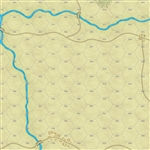
11 Days War is a two-player wargame, covering the final Central Powers offensive on the Eastern Front, Operation Faustschlag, which took place between February and May 1918. The game simulates the initial eleven days of offensive operations against the Bolsheviks and the ensuing pursuit in the Ukraine. The game pits the Central Powers Germany, Austria-Hungary and their allies against the Bolsheviks (the "Reds"), plus their allies.
|
|
|
|
|
|
|
|
|
|
Strategy & Tactics Issue #354 - Game Only
|
|
|
Eagles of Rome is a grand tactical two-player system for battles of the Roman Era, from the Republic through the Empire to the early Byzantine era. Caesar covers the battles of the Late Republic to the Early Empire (roughly 120 BC to AD 250). Players command armies of various types of forces, from Roman legions to barbarian hordes, with distinctions between melee and fire combat, plus special tactics. Morale is a critical factor. Caesar is played in scenarios. Each scenario represents a historical battle. The rules are in three sections. The first contains the Standard Rules common to all games in the series. The second is the Optional section, which gives rules that players can use at their option or not. The third is the Scenario section for specific battles.
|
|
|
|

|
|
|
|
|
|
Strategy & Tactics Issue #352 - Game Only
|
|
|
The French & Indian War is a two-player wargame of the conflict between the British and French Empires for control of North America during the wider Seven Years War. There are two opposing players: British Empire (Britain or British) and French Empire (France or French). Each player represents the high command for their respective forces in North America. There is also the possibility for intervention by American Indian and Spanish Imperial forces. The game has several scenarios, representing different starting situations. The game system models the effects of command control on campaigns conducted across vast distances of largely frontier terrain, and as part of the larger Seven Years War.
|
|
|
|
|
|
|
|
|
|
Strategy & Tactics Issue #351 - Game Only
|
|
|
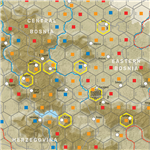
Bosnian War is a simulation of the brutal ethnic war that took place in Bosnia and Herzegovina in 1992–1995. There are two players: the Government player and the Bosnian Serb (VRS; Serb) player. The Government player controls the units of the Croatian Defense Council (HVO) although certain game events allow the Serb player to control the HVO units. The Serb player can also control the units of the Krajina Serb Army (SKV) through random events (13.0 & 17.0) or NATO intervention (15.0). The Government player can also control units of the Croatian Army (HV) under certain conditions (14.4). In this game, the enemy population is not the victim of collateral damage: the enemy population is the target, so conquering towns and cities and practicing ethnic cleansing is a key aspect of the game.
|
|
|
|